Don't Put It in the Bucket Yet
Five Specimens the Standard Cleaning Advice Destroys, and Two Free Jobs Worth Doing Tonight. Run it this evening, at your own table, on the box that has been sitting in the garage since the summer you carried it home.
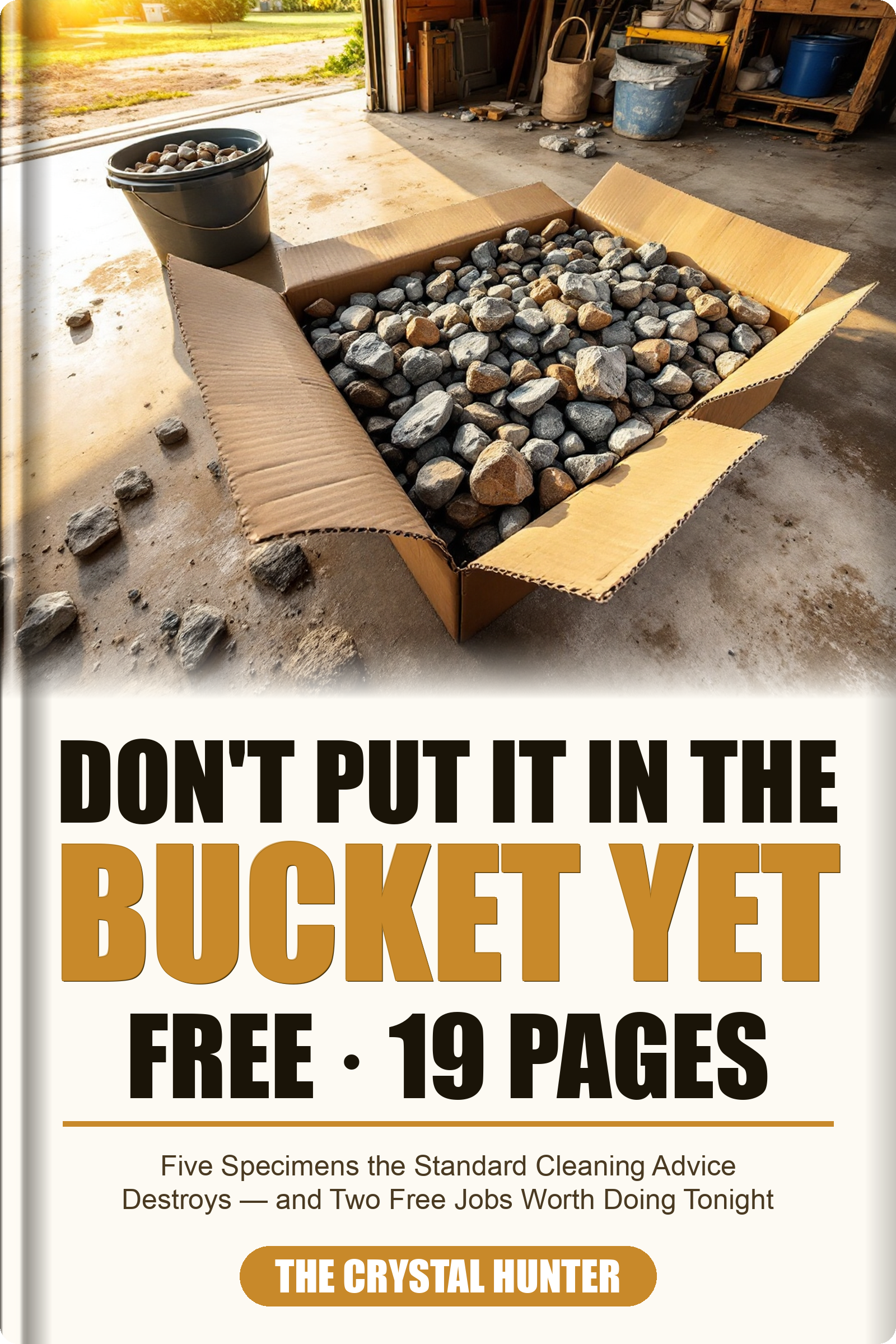
Ask this hobby how to clean a quartz specimen and you get six answers, and they are not variations on one method — they are six different chemicals, several of which cannot safely be in the same room. One forum thread answers that single question with oxalic acid, a rust remover, a lime-and-calcium remover, hydrochloric acid, a scouring powder and a soak in cola. The most-watched video on the subject exists precisely because of that: it was made to test three of the recommendations side by side.
So this sheet does not tell you how to clean anything. It tells you which pieces to keep out of the bucket, in the two minutes before the first bottle gets opened.
One email with the PDF. Then three short ones over the following nine days — why the fizz test decides everything that comes after it, why wet cutting is not the safe harbor everyone says it is and the measurements that show it, and a plain account of who our book is not for.
No cost, no card, unsubscribe in one click.
What is in it
- The two-minute triage. Three questions — does it fizz in vinegar, does it scratch glass, does a broken face come away flat and mirror-bright in three directions — and what each answer rules out. Between them they decide whether the acid you were about to use would clean the piece or dissolve it.
- The five that never go in an ultrasonic tank, and the two of those that should never go in water at all. Not a list copied from a jewelry trade site: it is rebuilt from the cleavage column of the standard mineralogical reference, which is why it turns out to include most of what actually comes out of a cavity looking good.
- The never-mix page, quoted from a manufacturer's own safety data sheet with its issue date — plus the naming trap that prevents an accident, because two products with almost the same name have not always had the same chemistry, and the label that governs is the one on the bottle in your hand.
- What to do with the bucket of used solution. This is the most-liked unanswered question in the niche: twelve likes and not one reply, under a cleaning video with 140,000 views. Neutralize it before it goes anywhere, and never re-use that container for anything else.
- Two jobs tonight that cost nothing and are urgent. Take the amethyst off the windowsill, because window glass blocks the UV-B and passes plenty of UV-A and the color center dies there. And get the pyrite and marcasite out of the damp basement, with the humidity numbers, because the federal conservation manual is blunt about it: preventable, but irreversible once it begins.
Every page carries its source by name and the date it was checked. And there is a page at the end saying what the sheet deliberately does not contain, which is every number you would need to actually clean something: no concentration, no temperature, no soak time.
You will also hear about The Crystal Hunter's Bible, our 237-page workshop manual on the same subject, because that is how a free sheet gets paid for. Unsubscribe in one click and the sheet is still yours. General information. Not legal advice, not an appraisal, and not professional chemical-safety advice. Acid goes into water and never the reverse, never mix cleaning chemicals, and read the label on the bottle in your hand. No guide can put a dollar figure on a specimen, and nothing here promises that anything you open will have crystals inside it.